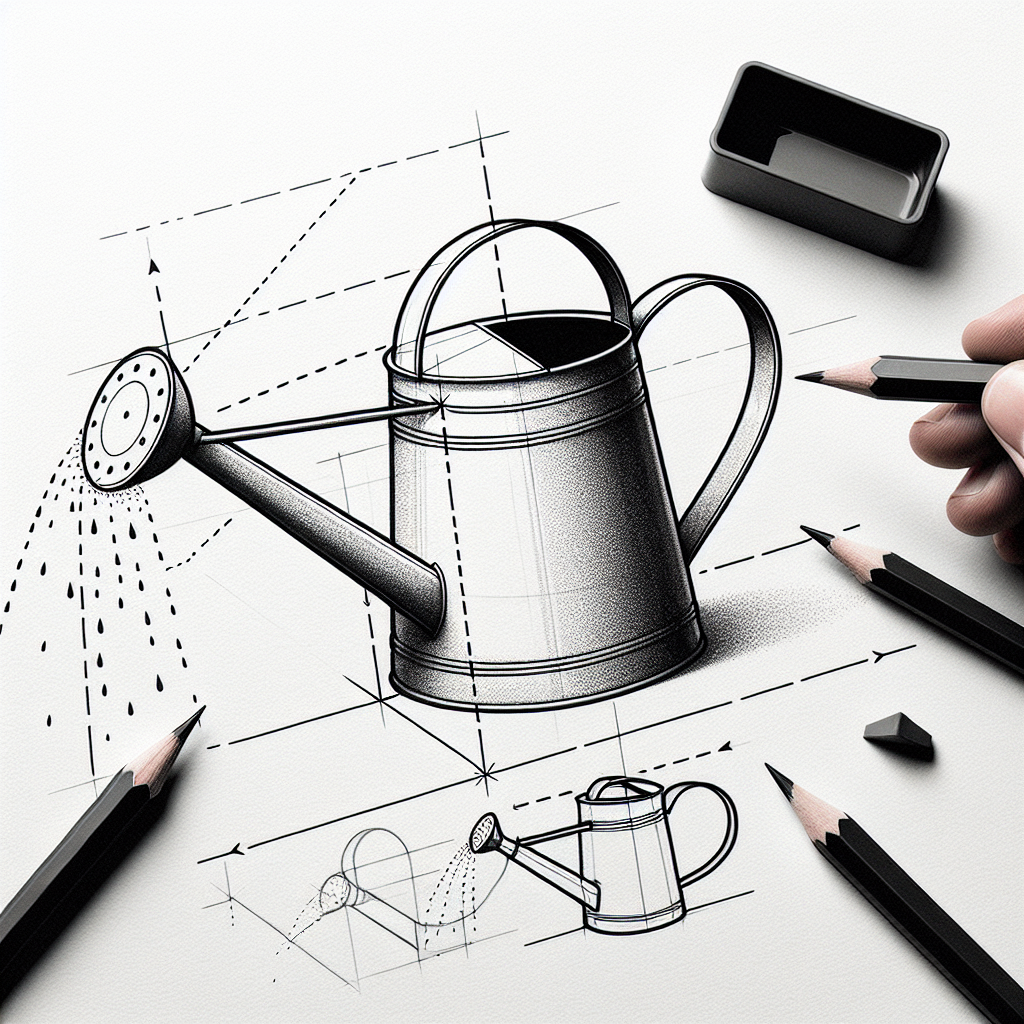
What you'll learn
Drawing a watering can helps develop an understanding of proportion and perspective due to its unique shape and spout. This exercise will improve your ability to capture 3D objects on a 2D plane accurately.
What you'll need
Step-by-step: how to draw watering can
Start by sketching a basic outline of the can's main body, focusing on its oval shape.
Add the spout and handle, ensuring they are proportionate to the main body.
Refine the shapes, paying attention to the curves and angles of the spout and handle.
Add details such as the lid, any indentations, and the nozzle holes.
Shade the drawing to give it a three-dimensional appearance, emphasizing light and shadow.
Pro tips for drawing watering can
Self-evaluation checklist
Check if the watering can looks balanced and three-dimensional, with realistic proportions and perspective. Ensure the spout and handle are accurately positioned and the shading creates a sense of depth.
Frequently asked questions
How long does this drawing exercise take?
The full watering can exercise is designed to fit in about 15 minutes of focused practice — one of the reasons it works as a daily habit.
Do I need any prior drawing experience?
No. This lesson is aimed at beginner artists and assumes only a pencil, paper, and willingness to observe.
What skill does this lesson target?
The focus is proportion and perspective. Repeating similar exercises over time is how this skill becomes second nature.
More drawing lessons

Get a new drawing lesson delivered to your inbox every morning — free.
Subscribe to Draw Daily →